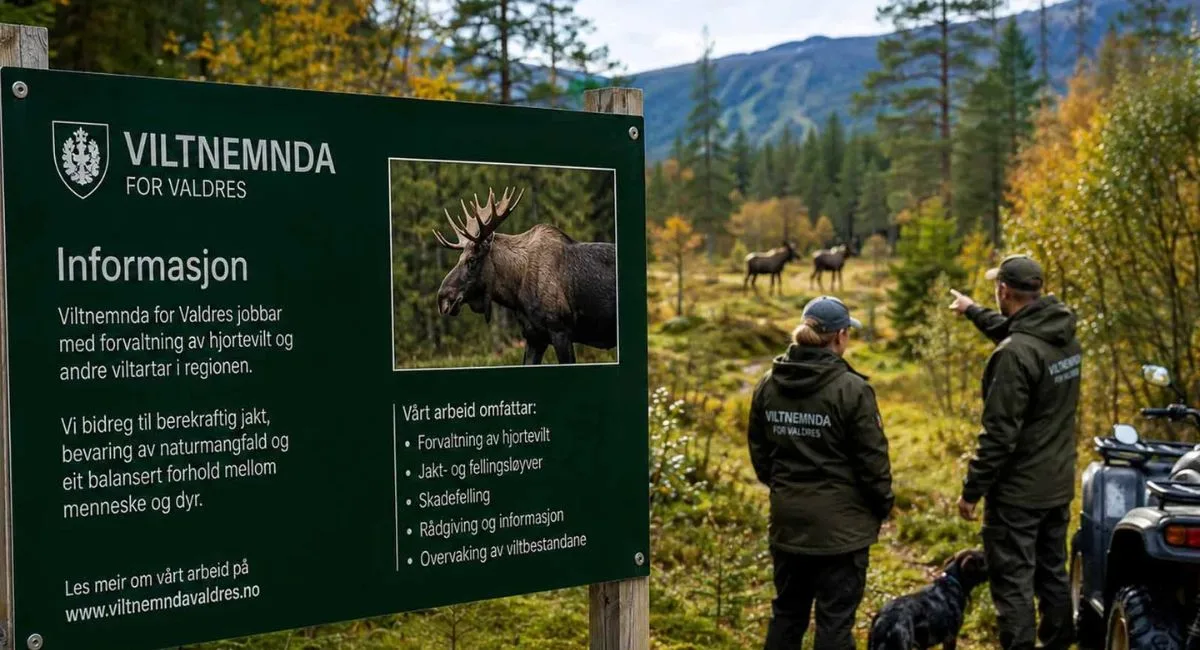
Viltnemnda is a Norwegian term associated with local wildlife management and municipal responsibility for wild animals and hunting-related matters. In simple English, it can be understood as a wildlife committee or wildlife board. The term is especially relevant in Norway because wildlife management is not handled only by national authorities. Municipalities have important responsibilities for managing wildlife, hunting, local conflicts, injured animals, and sustainable use of game resources.
The meaning of Viltnemnda is sometimes misunderstood because the organizational structure of wildlife administration has changed over time. Historically, Viltnemnda referred to formal wildlife committees operating in Norwegian municipalities. Since 1993, local wildlife management has been transferred to municipalities, and different municipalities have chosen different ways to organize these responsibilities. Some continue to use a dedicated wildlife committee or similar body, while others place wildlife matters within another municipal structure.
This makes Viltnemnda more than simply a translation of a Norwegian word. It represents an important part of the relationship between wildlife, local government, hunters, landowners, agriculture, forestry, road safety, and environmental management.
This guide explains what Viltnemnda means, how the system developed, what responsibilities are associated with municipal wildlife management, how hunting and wildlife populations are managed, and why the concept remains important in modern Norway.
What Does Viltnemnda Mean?
The Norwegian word Viltnemnda is the definite form of viltnemnd. The term is made up of concepts associated with wildlife and a committee or board.
The closest English translations are:
- Wildlife committee
- Wildlife board
- Municipal wildlife committee
- Local wildlife management committee
Norwegian dictionaries define viltnemnd as a municipal committee dealing with wildlife management. The word is therefore connected to public administration rather than being the name of a particular animal, hunting organization, or private conservation group.
In practical terms, Viltnemnda refers to a local institutional role within Norway’s wildlife management framework. Its work can involve decisions and administrative responsibilities concerning game species, hunting areas, wildlife populations, injured animals, and conflicts between wildlife and people.
However, it is important not to assume that every Norwegian municipality today has an identically structured body called Viltnemnda. Modern municipal organization varies considerably.
What Is the Role of Viltnemnda?
The basic purpose behind Viltnemnda is to help ensure that wildlife is managed responsibly at the local level.
Norway has extensive forests, mountains, agricultural areas, roads, settlements, and other landscapes where people and wild animals regularly interact. Local conditions can differ dramatically from one municipality to another. A wildlife management approach that works in a heavily forested area may not be appropriate in a municipality dominated by farmland, coastal terrain, or high mountain habitats.
Municipal wildlife management helps account for those local differences.
Its responsibilities may include matters such as:
- Wildlife population management
- Hunting administration
- Game management planning
- Management of huntable species
- Handling wildlife-related conflicts
- Cooperation with landowners and hunting organizations
- Dealing with injured or dead wildlife
- Supporting wildlife surveys and knowledge gathering
- Reducing wildlife-related risks to people
- Supporting sustainable wildlife management
- Managing or supporting municipal wildlife funds
The exact duties depend on the municipality, the species involved, applicable regulations, and the authority delegated under Norwegian law.
The central idea is straightforward: national rules establish a broader framework, while local government deals with many practical wildlife-management questions.
Is Viltnemnda a Government Authority?
Viltnemnda is closely connected with municipal government, but the modern legal structure requires an important distinction.
Historically, Viltnemnder had a more clearly defined formal role. According to Store norske leksikon, state Viltnemnder existed in all Norwegian municipalities from 1952 until 1992. From January 1, 1993, local wildlife management was transferred to municipalities. Since then, municipalities have been able to organize their wildlife administration in different ways.
This means that describing Viltnemnda as a single nationwide agency with exactly the same structure everywhere would be misleading.
Today, the municipality is the key local public authority for wildlife matters covered by the relevant legislation. A municipality may use a dedicated committee, another political committee, municipal administration, or a combination of arrangements.
The current legal framework also recognizes municipalities and county authorities as important wildlife-management authorities. The newer Norwegian legislation states that municipalities and county authorities shall work to promote the objectives of wildlife legislation and provide guidance in wildlife-management matters.
The History of Viltnemnda in Norway
Understanding the history of Viltnemnda makes the modern term much easier to understand.
From 1952 to 1992, Norway had state Viltnemnder in all municipalities. These bodies were appointed by municipal councils and handled local wildlife administration within the national system.
A major administrative change occurred in 1993. Responsibility for local wildlife management was transferred to municipalities.
This reform did not mean that wildlife management stopped being organized locally. Instead, it gave municipalities greater responsibility for determining how their local wildlife administration should function.
As a result, Norway developed a variety of organizational models. Some municipalities maintained a dedicated Viltnemnd-style committee, while others integrated wildlife responsibilities into broader municipal structures.
This historical development explains why modern sources may use the word Viltnemnda differently. In one municipality, it may refer to a specific elected committee. In another, wildlife responsibilities may be handled by municipal officials or another designated body.
Viltnemnda and Municipal Wildlife Management
Municipal wildlife management is the heart of the Viltnemnda concept.
The municipality operates at the level where wildlife issues often become practical community issues. For example, a growing deer population can affect agriculture. Moose can create serious road-safety concerns. Injured animals may require immediate action. Hunting organizations may need decisions about hunting areas and quotas. Landowners may need to coordinate management across property boundaries.
These problems cannot always be solved effectively through national policy alone.
Local wildlife management therefore considers factors such as:
- Local wildlife populations
- Habitat availability
- Agricultural damage
- Forestry interests
- Hunting pressure
- Road and traffic risks
- Human settlements
- Conservation objectives
- Landowner interests
- Local knowledge
- Wildlife welfare
The goal is not simply to increase or decrease animal numbers. Good wildlife management attempts to maintain a sustainable relationship between wildlife populations and the ecosystems and communities in which they live.
How Does Viltnemnda Relate to Hunting?
Hunting is an important part of Norwegian wildlife management, particularly for species that are legally huntable.
However, hunting in Norway is regulated. It is not simply a matter of entering a forest and deciding which animal to hunt.
Wildlife legislation establishes rules concerning when hunting and capture are permitted, which species may be hunted, where hunting can take place, and other conditions. The current Viltressursloven states that hunting and capture are permitted when authorized by law or regulations.
Municipal wildlife management can play a significant role in the practical administration of huntable game species.
For example, local authorities may be involved in:
- Approving or managing hunting areas
- Determining certain aspects of game management
- Issuing or administering hunting-related decisions
- Managing population objectives
- Coordinating with landowners
- Monitoring hunting results
- Supporting sustainable harvest levels
The exact authority depends on the species and the applicable legal framework.
Viltnemnda and Hunting Quotas
One of the most commonly associated subjects is the allocation of hunting quotas.
A hunting quota establishes how many animals may legally be harvested in a particular area under the applicable rules. Quotas are intended to prevent excessive hunting while allowing populations to be managed where appropriate.
For large game species such as moose and deer, population management can be particularly important.
A municipality may need to consider:
- Estimated population size
- Population trends
- Reproductive rates
- Available habitat
- Agricultural impacts
- Forest damage
- Traffic collisions
- Local hunting objectives
- Long-term sustainability
The purpose of a quota is therefore not simply to give hunters permission to take animals. It is a wildlife-management instrument.
The Norwegian system also distinguishes between different types of hunting and wildlife management decisions, meaning that not every species is managed through the same quota process.
What Animals Are Associated With Viltnemnda?
Viltnemnda is not an organization dedicated to one specific animal.
Its broader subject is wildlife management, and local responsibilities can involve several species depending on the municipality.
Common game-management discussions can include:
- Moose
- Red deer
- Roe deer
- Wild reindeer
- Beaver
- Other legally managed game species
Moose and deer are particularly significant because their populations can influence agriculture, forestry, hunting, biodiversity, and road safety.
Different species require different management approaches. A large herbivore population, for example, may create different ecological and social pressures than smaller game species.
This is why local wildlife management requires more than simply counting animals. Authorities need to consider habitat, population trends, human activity, and the wider ecosystem.
Viltnemnda and Injured Wildlife
One of the most practical aspects of local wildlife management concerns animals that are injured or killed in human-related incidents.
Road collisions are a well-known example.
Norwegian roads pass through habitats used by wildlife, creating the possibility of collisions involving animals such as moose and deer. An injured animal can represent both an animal-welfare issue and a public-safety concern.
Local wildlife personnel and municipal authorities may therefore become involved in situations involving:
- Road-killed wildlife
- Injured animals
- Wildlife near populated areas
- Animals creating safety risks
- Necessary follow-up after wildlife accidents
- Tracking or locating injured animals
The precise response depends on the circumstances and local procedures.
Older descriptions of Viltnemnda specifically associate the body with responding to wildlife injured in traffic accidents. Norwegian dictionary material also records the traditional connection between Viltnemnda and the handling of animals injured in road collisions.
This is one reason the term can appear in discussions that have nothing to do with ordinary hunting.
What Happens After a Wildlife Collision?
A collision with wildlife can become a matter of public safety and animal welfare.
If a driver hits an animal such as a moose or deer, simply leaving the scene may create further danger. Reporting procedures exist so that the appropriate authorities can assess what happened and determine whether an injured animal needs to be located.
The relevant response may involve police, municipal wildlife personnel, trained tracking teams, or other authorized people depending on local procedures.
The reason for this process is important. A wounded animal may move away from the collision site and become difficult to find. A professional response can help determine whether the animal survived, whether it needs assistance, and whether further safety measures are necessary.
This illustrates the practical side of local wildlife management. Viltnemnda is not only about hunting regulations. Wildlife administration can also involve immediate responses to conflicts between animals and human infrastructure.
Viltnemnda and Wildlife Conflicts
Human-wildlife conflict occurs when wildlife creates problems for people, agriculture, infrastructure, or public safety.
Examples can include:
- Deer damaging crops
- Moose entering roads
- Wildlife near residential areas
- Animals damaging gardens or agricultural land
- Wildlife causing traffic hazards
- Animals becoming trapped or injured
- Conflicts involving livestock and wild predators
Local authorities are often in a better position to understand these problems because they know the landscape and community involved.
Effective wildlife management aims to reduce unnecessary conflict without treating wildlife simply as a problem to eliminate.
Possible approaches may include population management, prevention, monitoring, habitat management, public information, fencing, warning systems, and legally authorized removal where necessary.
The appropriate solution depends on the species and situation.
Viltnemnda and Agriculture
Agriculture is one of the areas where wildlife management can have a direct economic impact.
Wild animals can damage crops, young trees, pasture, and other agricultural resources. At the same time, agricultural landscapes can provide important feeding and habitat opportunities for wildlife.
This creates a management challenge.
A local authority may need to balance:
- Protection of wildlife populations
- Protection of agricultural production
- Sustainable hunting
- Landowner interests
- Biodiversity
- Public safety
This balance is one reason local knowledge is valuable.
A wildlife population that appears healthy from a national perspective may still create significant local problems if its concentration is particularly high in agricultural areas.
Viltnemnda and Forestry
Forestry is another important consideration.
Species such as moose and deer can influence forest regeneration and vegetation. Where browsing pressure becomes high, young trees and forest growth can be affected.
Wildlife management can therefore intersect with forestry objectives.
Local decision-makers may consider:
- Forest composition
- Regeneration
- Wildlife density
- Seasonal movement
- Browsing pressure
- Hunting pressure
- Habitat quality
The objective is not necessarily to maximize either wildlife numbers or timber production. Instead, responsible management attempts to find a sustainable balance.
Municipal Wildlife Funds
An important part of Norwegian wildlife administration is the municipal wildlife fund.
Under the current wildlife legislation, municipalities were hunting for moose, red deer, or roe deer is available are required to establish a municipal wildlife fund. These funds are intended to promote wildlife management in the municipality.
Separate regulations govern municipal and county wildlife funds.
For municipalities, relevant income can include hunting-related fees such as applicable fees associated with harvested moose and red deer, along with other permitted sources. The funds are intended for wildlife-related purposes rather than general municipal spending.
Wildlife funds can support activities connected with:
- Wildlife management
- Wildlife knowledge
- Hunting organization
- Wildlife surveys
- Search and handling of injured or dead game
- Measures designed to reduce agricultural damage from game
This provides municipalities with a financial mechanism to support practical wildlife-management work.
Who Makes Decisions About Wildlife?
Norway’s wildlife management system involves several levels of government.
At the national level, state wildlife authorities establish legislation, regulations, guidance, and broader management frameworks.
At the regional level, county authorities have wildlife-related responsibilities.
At the local level, municipalities deal with many practical wildlife-management responsibilities.
The current Viltressursloven identifies the King, ministry, directorate, and Statsforvalteren as state wildlife authorities. It also assigns wildlife-management responsibilities to counties and municipalities.
This layered structure is important because no single committee controls all wildlife management in Norway.
Instead, responsibilities are distributed according to the species, issue, geographic area, and applicable legislation.
What Is the Difference Between Viltnemnda and Villreinnemnda?
The two terms can look similar, but they should not be confused.
Viltnemnda is associated with municipal wildlife management.
Villreinnemnda is a regional cooperation body specifically associated with wild reindeer management.
Villreinnemnder operate in designated wild reindeer areas involving multiple municipalities. Their purpose is to support coordinated and biologically sound management of wild reindeer and their habitats.
The distinction matters because wild reindeer often move across municipal boundaries. Managing a population that occupies a large landscape requires cooperation beyond a single municipality.
Therefore, Viltnemnda and Villreinnemnda can be part of the broader wildlife-management system while serving different purposes.
Why Local Wildlife Management Matters
Wildlife does not follow municipal boundaries in the same way that administrative systems do.
An animal can move between forests, farms, roads, and neighboring municipalities. A population can also cross administrative borders.
This makes cooperation essential.
Local wildlife management matters because it connects broad environmental goals with conditions on the ground.
A municipality can consider questions such as:
- Where are animals concentrated?
- Are traffic collisions increasing?
- Is agricultural damage becoming serious?
- Are wildlife populations increasing or decreasing?
- Are hunting levels sustainable?
- Which habitats are important?
- What concerns do local residents have?
- How can wildlife welfare be protected?
These questions cannot always be answered through national statistics alone.
How Viltnemnda Supports Sustainable Wildlife Management
Sustainable wildlife management means using wildlife resources while maintaining healthy populations and functioning ecosystems over the long term.
For hunting, this generally means harvest levels should be compatible with population objectives and ecological conditions.
For conservation, it means protecting important habitats and avoiding management decisions that undermine long-term biodiversity.
For communities, it means reducing serious wildlife-related problems without unnecessarily harming wildlife.
A balanced system therefore considers three broad dimensions:
Ecological sustainability: Wildlife populations and habitats should remain viable.
Social sustainability: Local communities, hunters, landowners, and the wider public need to be considered.
Administrative sustainability: Decisions should follow legislation, evidence, and appropriate management responsibilities.
Viltnemnda, where used as a municipal wildlife committee, sits within this larger balance.
How Wildlife Management Uses Local Knowledge
Wildlife management is based on more than legal rules.
Local knowledge can be extremely valuable because residents, hunters, landowners, forestry workers, farmers, and wildlife professionals may observe changes that are difficult to capture through occasional surveys.
Examples of useful local information include:
- Changes in animal sightings
- Wildlife movement patterns
- Road-crossing locations
- Crop damage
- Forest browsing
- Changes in hunting results
- Injured or dead wildlife
- Habitat changes
However, local knowledge is most useful when combined with reliable data and scientific methods.
Modern wildlife management therefore benefits from bringing together field observations, population data, hunting statistics, mapping, research, and administrative records.
Is Viltnemnda Still Relevant Today?
Yes, the concept remains relevant, but its modern meaning needs to be understood in context.
The historical Viltnemnd structure changed significantly when local wildlife management was transferred to municipalities in 1993. Municipalities subsequently developed different organizational arrangements.
Therefore, it is more accurate to think of Viltnemnda as a term connected with municipal wildlife management rather than assuming that Norway has one standardized nationwide committee structure.
In some places, a body may still be formally called Viltnemnda. Elsewhere, comparable responsibilities may be handled by another municipal committee or administrative unit.
The underlying responsibility remains important because municipalities continue to play a significant role in local wildlife management under Norwegian law.
Read more: WatchNewMovieNet com: Complete Guide, Safety, Legality, Current Status, and Better Alternatives
Common Misunderstandings About Viltnemnda
Several misconceptions can make the term confusing.
Misunderstanding 1: Viltnemnda is a national wildlife agency.
It is not a single national agency. The term is primarily connected with municipal wildlife administration.
Misunderstanding 2: Every municipality has exactly the same Viltnemnda structure.
Municipalities have considerable variation in how local wildlife management is organized.
Misunderstanding 3: Viltnemnda only deals with hunting.
Wildlife management can also involve injured animals, wildlife conflicts, population management, agriculture, forestry, road safety, and conservation.
Misunderstanding 4: Viltnemnda controls every wildlife decision in Norway.
Wildlife responsibilities are distributed among national, regional, and local authorities.
Misunderstanding 5: Viltnemnda is the same as Villreinnemnda.
They are different bodies with different roles. Villreinnemnda is specifically connected with wild reindeer management in designated areas.
Viltnemnda and Modern Wildlife Challenges
Wildlife management is becoming increasingly complex because landscapes are changing and human activity continues to expand.
Road networks, urban development, agriculture, forestry, recreation, climate variation, and habitat fragmentation can all affect wildlife.
This creates new questions for local authorities.
How should wildlife crossings be planned? How can collisions be reduced? How should growing deer populations be managed? How can important habitats be protected while communities continue to develop? How can hunting remain sustainable?
These are not questions with one universal answer.
Local wildlife management provides a mechanism for adapting broader national objectives to local conditions.
Frequently Asked Questions About Viltnemnda
What does Viltnemnda mean in English?
Viltnemnda can be translated as wildlife committee or wildlife board. It refers to a municipal body or local administrative arrangement associated with wildlife management in Norway.
Is Viltnemnda a Norwegian organization?
The term is Norwegian and is associated with Norway’s municipal wildlife-management system. It does not necessarily refer to one single nationwide organization.
What does Viltnemnda do?
Depending on the municipality and its organizational structure, responsibilities can include wildlife management, hunting-related administration, game population management, wildlife conflicts, injured animals, and cooperation with landowners and hunting interests.
Does Viltnemnda issue hunting permits?
Wildlife and hunting administration can involve municipalities, but the exact process depends on the species, hunting area, regulations, and the relevant authority. It is therefore inaccurate to say that every hunting permit in Norway is issued directly by Viltnemnda.
Does Viltnemnda manage moose?
Moose are among the important game species considered in Norwegian municipal wildlife management. Local authorities can have significant responsibilities concerning their management.
Does Viltnemnda deal with road accidents involving animals?
Wildlife management systems can be involved in responding to injured or dead wildlife after traffic collisions. Local procedures determine which authorities and trained personnel respond.
Is Viltnemnda still used today?
The term is still used in some Norwegian municipal contexts, but municipalities have different organizational structures. The transfer of local wildlife management to municipalities in 1993 resulted in substantial variation in how these responsibilities are organized.
What is a municipal wildlife fund?
A municipal wildlife fund is a dedicated fund used to support wildlife-management purposes. Under current legislation, municipalities where hunting for certain large game species is permitted must establish such a fund.
What is the difference between Viltnemnda and Villreinnemnda?
Viltnemnda is associated with municipal wildlife management, while Villreinnemnda is a regional body focused specifically on wild reindeer management in designated areas.
Why is Viltnemnda important?
Viltnemnda represents the local dimension of wildlife governance. It helps connect national wildlife policy with practical issues involving animals, landowners, hunters, agriculture, forestry, public safety, and local ecosystems.
Final Thoughts on Viltnemnda
Viltnemnda is best understood as part of Norway’s local wildlife-management tradition and municipal wildlife administration. The term is often translated as wildlife committee or wildlife board, but its meaning becomes clearer when viewed through Norway’s administrative history.
From 1952 to 1992, Viltnemnder had a formal role in local wildlife administration throughout Norway. In 1993, responsibility for local wildlife management was transferred to municipalities, after which municipalities adopted different organizational models.
Today, the underlying function remains important. Municipal wildlife management helps address the practical realities of living alongside wild animals. It can involve hunting management, population monitoring, wildlife funds, agricultural and forestry concerns, road safety, injured animals, habitat considerations, and cooperation among local stakeholders.
The most important point is that Viltnemnda should not be viewed as an isolated hunting committee. It is better understood within Norway’s broader, multi-level wildlife governance system, where national legislation establishes the framework and municipalities handle many local responsibilities.
For anyone searching for the meaning of Viltnemnda, the short answer is simple: it is a Norwegian term connected to municipal wildlife management, commonly understood as a wildlife committee or wildlife board. Its historical role and modern municipal context explain why the term continues to appear in Norwegian discussions about hunting, wildlife populations, conservation, and human-wildlife coexistence.


One thought on “Viltnemnda: Meaning, Role, Responsibilities, and Norway’s Wildlife Management System”